
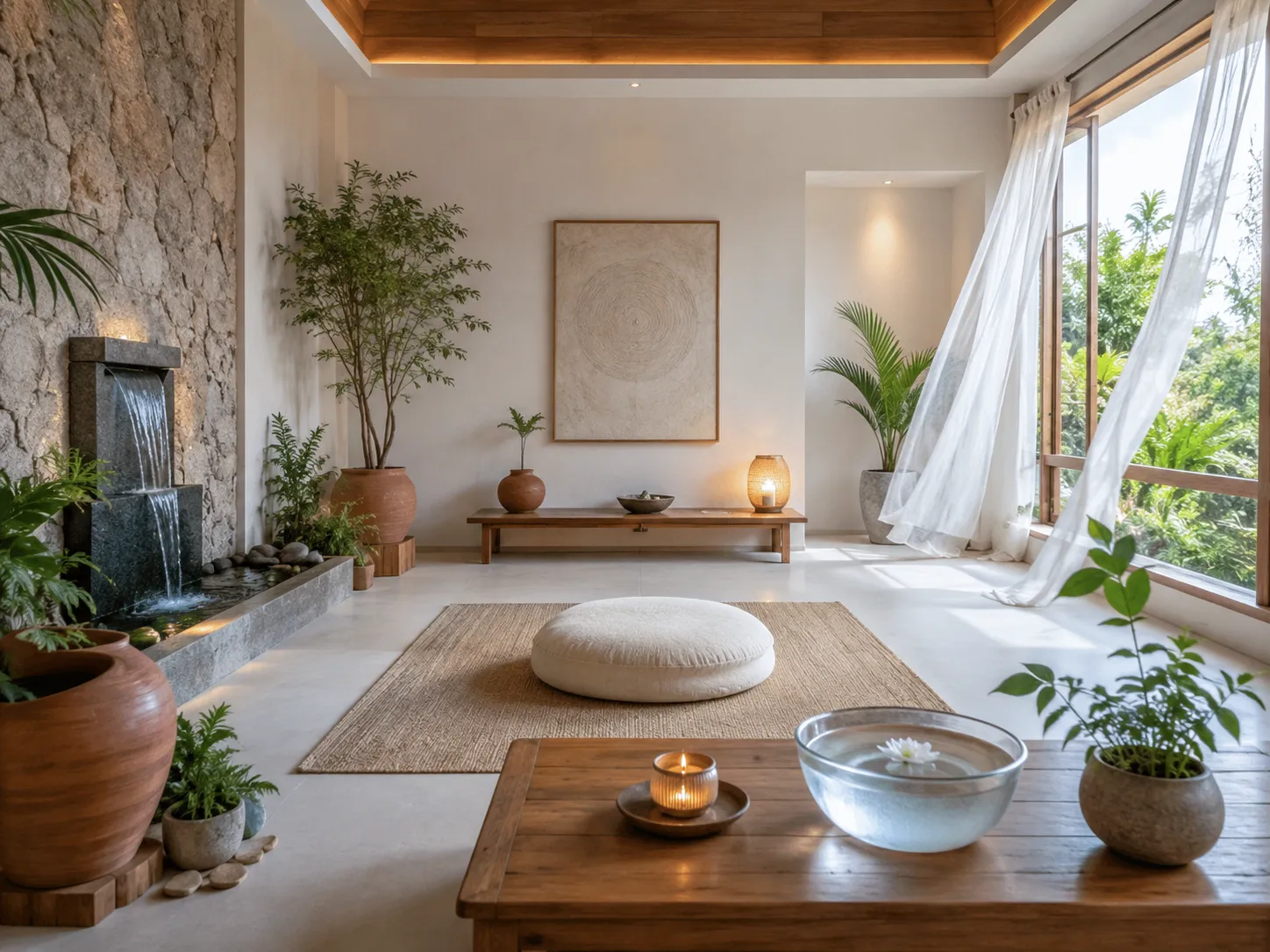
The home you live in interacts with your mind, your moods and your health every single day.
A natural question follows. How? By what mechanism does a space influence the people inside it?
In Vastu Shastra, the answer begins with one principle: energy is always flowing. And that flow is understood through five elements - earth, water, fire, air and space, known in Sanskrit as the Pancha Mahabhutas - which Vastu sees as the building blocks of every home, and of every person living in it.
This article introduces the five, one by one, and shows you how to start recognizing them in your own rooms.
Nature teaches us about flow
Everything in nature exists in movement. Rivers flow, air circulates, seasons turn. Your breath moves in and out several hundred times an hour without being asked. Blood circulates. Even thoughts and emotions refuse to sit still.
Where there is healthy movement, there is vitality. Where movement becomes blocked or stagnant, imbalance begins to appear. A river that stops moving becomes a swamp.
The same principle applies to our homes. Some spaces feel open, calm and quietly uplifting the moment you enter. Others feel heavy, even when they are clean and expensively furnished. Many factors contribute to that experience - but Vastu teaches that the way energy moves through a space, or fails to, plays a central role. And the language Vastu uses to describe that movement is the language of the elements.
What are the five elements of Vastu Shastra?
First, a clarification. These are not elements in the chemistry-lab sense. Think of them as five qualities, five states that all matter and energy move through - from the most solid to the most subtle. They exist in nature, in your body, and in every built environment. The same five underpin Ayurveda, where they combine into the three doshas, which is why a Vastu reading of a home and an Ayurvedic reading of health so often point to the same imbalance from two sides.
Each element even has its own sense: earth is smell, water is taste, fire is sight, air is touch, and space is sound. Your home speaks to all five, all day long.
Let's meet them.
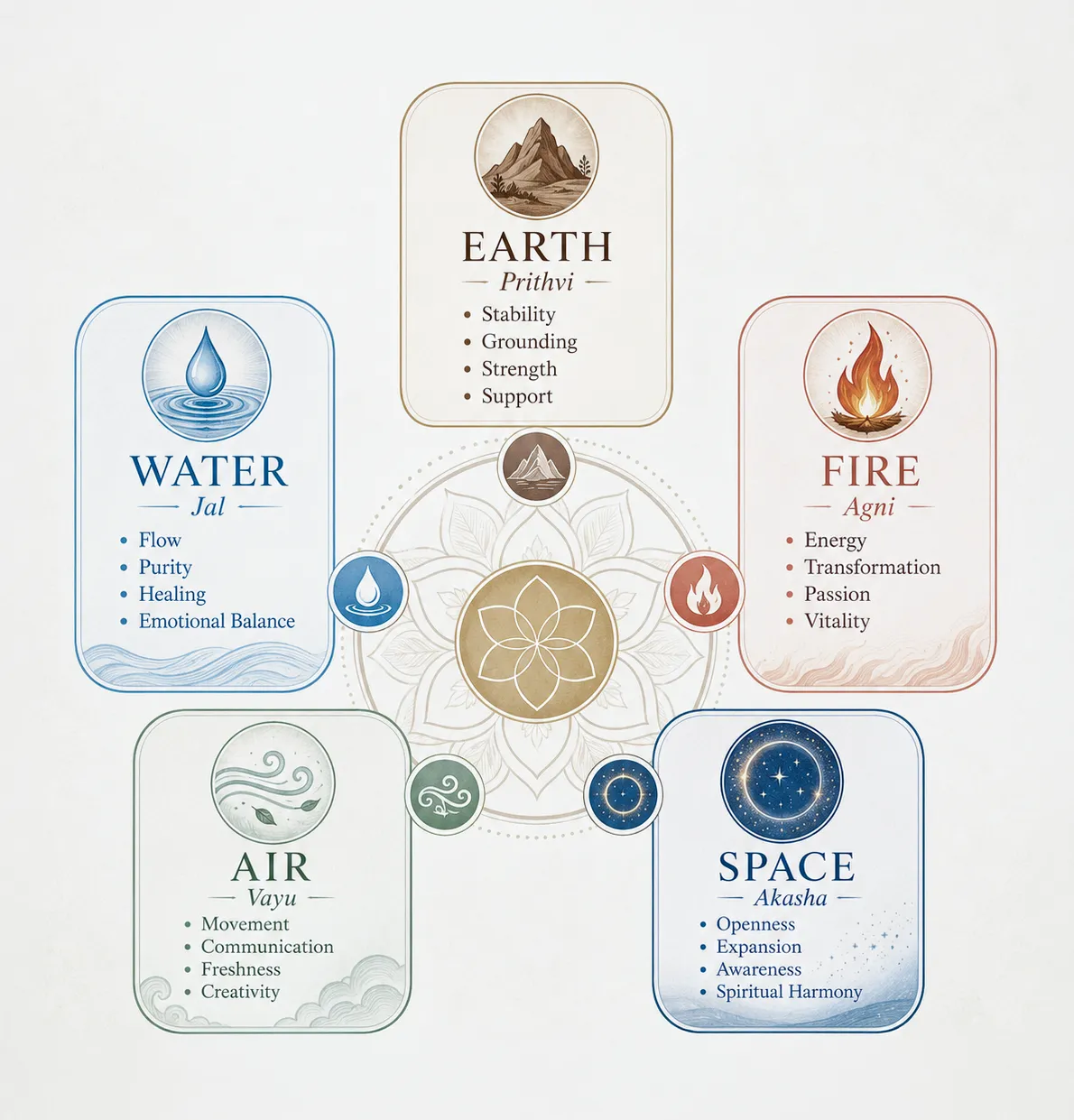
Earth (Prithvi) - stability, support, grounding
Earth is the most solid of the five, and in a home it is the structure itself: walls, floors, stone, clay, timber, heavy furniture, and the plants and soil you bring inside. Earth is what makes a home feel like it is holding you.
When earth is deficient, a space feels temporary and unsettled - the echoing flat you never quite unpacked in. When it dominates, rooms turn heavy and hard to change, and the people in them can slide toward inertia. Strengthening it costs little: natural materials, a few substantial pieces you love rather than many light disposable ones, and something alive and rooted in a pot.
Water (Jala) - nourishment, adaptability, flow
Water enters your home through taps, bathrooms, the kitchen, an aquarium or a small fountain - and, more subtly, through mirrors and glass, which carry its reflective quality. In Vastu, water is tied to nourishment and to emotional life: how easily things, and feelings, move.
Water asks for one thing above all: that it runs clean and moves freely. Dripping taps, damp patches, blocked drains and stagnant stored water are treated seriously in Vastu - not as omens, but as flow interrupted. Fix leaks quickly. Keep drinking water fresh and its storage clean. A home where water behaves well tends to feel emotionally lighter, and that is rarely a coincidence.
Fire (Agni) - transformation, vitality, inspiration
Fire is sunlight, the kitchen stove, your lamps and candles, and every electrical device in the house. It governs transformation - the digestion of food, and in a wider sense the digestion of life: ambition, motivation, drive.
Too much fire and a home turns agitated: overheated rooms, screens glowing in every corner, short tempers. Too little and everything goes dull - dark rooms, low energy, a kitchen that is never used. That last one matters more than people think. In a city where dinner arrives by app, a cold, unused kitchen quietly starves the fire element at the center of family life. Cook something, even simple, most days. Let real daylight in. Light one warm lamp, or a candle, as evening settles.
Air (Vayu) - movement, communication, freshness
Air is the breath of the house: windows, cross-ventilation, fans, fragrance, the slight movement of leaves on an indoor plant. Vastu links vayu with communication and relationships - and anyone who has sat through a meeting in a stuffy room knows how quickly stale air produces stale conversation.
When air stagnates, homes smell shut-in and feel mentally foggy. When it is excessive, spaces turn draughty and restless, and nobody settles anywhere. The remedy is mostly free: open windows daily, even briefly; let bedding and curtains breathe; create a path for air to actually cross the home instead of dead-ending in one room.
Space (Akasha) - openness, connection, possibility
Space is the subtlest element and the container for the other four. In a home it is emptiness itself: the open center of a room, the gaps between furniture, a clear surface, silence. Its sense is sound - which means how your home sounds is part of its Vastu.
The enemy of space is clutter, and here Vastu and modern psychology agree completely. Every object in a room occupies a little of your attention along with its patch of floor; an overfull cupboard and an overfull mind tend to live at the same address. Clear the center of your main rooms. Empty one surface entirely and keep it that way. Allow the house ten minutes of genuine quiet each day.
Each element also has a natural zone in the home - the directional map we touched on last month. We will explore that properly in the next article, so for now, don't worry about where. Focus on whether each element is present and healthy at all.
The five elements in a UAE home
Living in Dubai or Sharjah gives this framework a particular flavor.
For half the year our homes are sealed against the heat, so vayu is usually the first element to suffer - air conditioning cools air but does not renew it. Use the early mornings, and the winter months, to genuinely air the house. Fire is abundant outside and often missing inside: we black out the fierce sun, then live under artificial light, so managed daylight becomes precious. High-rise living puts many of us thirty floors from actual earth, which makes plants, clay, cotton and other natural materials more than decoration - they are grounding. Water deserves vigilance in a climate of hard water and hidden AC condensation leaks. And space disappears fastest of all, because compact apartments fill quickly. In a UAE flat, what you choose not to keep is a Vastu decision.
Balance over perfection
Vastu is often mistaken for a rigid rulebook. Its deeper purpose is harmony between people, nature and the spaces they inhabit - and harmony is a balance, never a score of 100.
You do not need all five elements in equal measure in every room. A kitchen should lean toward fire; a bedroom toward earth. What you are looking for is the absence of extremes: no element starved, no element allowed to shout down the rest. Natural light, fresh air, uncluttered floors and rooms used for what they are suited to will carry you most of the way there. A balanced home supports a balanced life.
Your observation exercise for the week
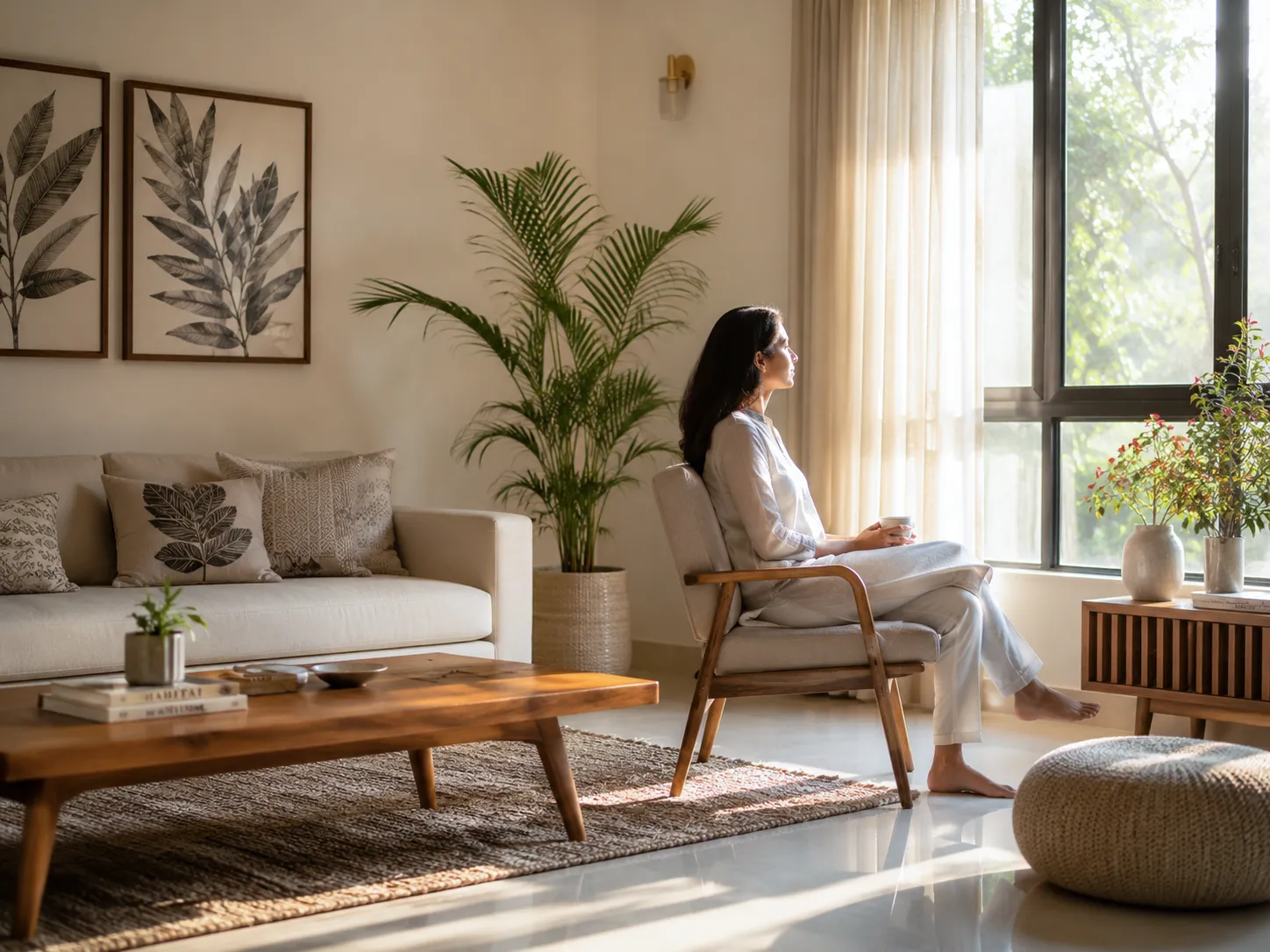
Before changing anything - and I mean anything: no furniture moved, no directions checked, nothing bought - spend this week simply observing. Walk your home once a day with these questions:
- Which room feels the most peaceful, and which feels heavy or uncomfortable?
- Where does natural light enter, and where does it never reach?
- Where does fresh air actually move?
- Where does your family naturally gather - and which spaces does everyone quietly avoid?
- How does your body feel in each room? Shoulders, breath, urge to stay or leave?
Notice that different spaces in the same home carry noticeably different qualities. That observation - yours, not a consultant's - is the foundation everything else in this series will build on.
Common questions about the five elements of Vastu
What are the five elements in Vastu Shastra?
The Pancha Mahabhutas: earth (prithvi), water (jala), fire (agni), air (vayu) and space (akasha). Vastu understands them as five qualities of energy present in nature, in the human body and in every building, and reads a home's character by how these five are balanced within it.
Are Vastu's five elements the same as the elements in Feng Shui?
No, and this surprises many people. Feng Shui works with wood, fire, earth, metal and water; Vastu works with earth, water, fire, air and space. Three names overlap but the systems developed independently and use them differently. Our introduction to Feng Shui covers the Chinese system.
How do I know which element is out of balance in my home?
The home usually tells you. Stale, shut-in air points to vayu; damp, leaks or drainage trouble to jala; a dark home or a dead kitchen to agni; clutter and constant noise to akasha; a rootless, unsettled feeling to prithvi. A consultation maps this room by room, but your own week of observation will reveal more than you expect.
Do I need to buy special products or remedies to balance the elements?
Almost never. Most elemental balancing is done with light, air, water maintenance, decluttering and how you use each room - none of which costs anything. Be cautious of anyone whose Vastu advice always ends in an expensive object. Awareness first; purchases rarely.
Which of the five elements is most important?
Balance itself is what matters, but if one deserves special respect it is space. Akasha is the container: without openness, light cannot enter, air cannot move and nothing else has room to flow. This is why decluttering is the first prescription in almost every consultation I give.
Dr. Jaya Harikumar is the founder of JH Lifestyle, a holistic living consultancy based in Sharjah Media City, UAE, offering Vastu, Feng Shui, sound healing and wellness consultations across the Emirates. Book a free 30-minute consultation.


