
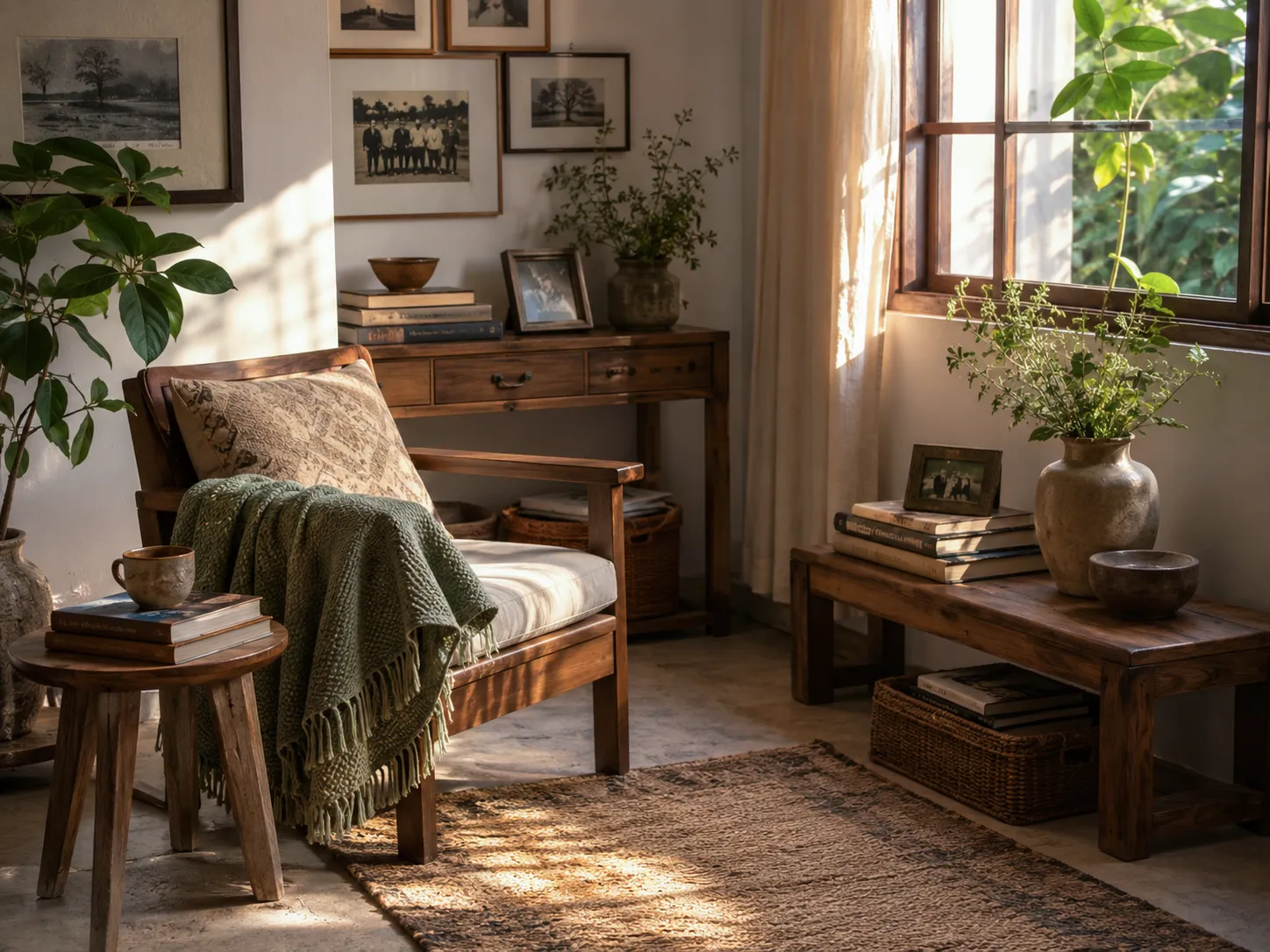
The rooms of your home are not interchangeable. There is a chair you always end up in when you want to read. A corner you drift toward when you need to think. One room where conversation flows late into the evening - and another that everyone passes through but nobody stays in.
Most of us live with these differences for years without asking the obvious question: why do I feel this here?
That question sits at the heart of both yoga and Vastu. Yoga turns the attention inward; Vastu turns it toward the space around us. In the first two articles of this series we explored how our homes influence us and how energy flows through the five elements. Today we take the next step - from noticing that spaces feel different, toward understanding why.
Learning to observe
Before any theory, look around your home with fresh eyes. Where do you read? Where do you think? Where do the good conversations happen, and which room feels strangely uncomfortable no matter how it is furnished?
Don't search for explanations yet. Simply notice your own experience. Vastu is learned this way - not by memorizing another rule, but by becoming a better observer of what is already happening around you.
Nature never feels the same everywhere
Think about an hour beside the ocean: the vastness, the rhythm, the way thought loosens. Now a dense forest - enclosed, hushed, alive in a completely different register. Both beautiful. Each produces a distinctly different response in you.
Nature expresses different qualities of energy in different places, and the sages who shaped Vastu observed that our built environments do the same. A home, seen this way, contains several small environments sharing walls, and each has its own character.
Why directions carry different energies
Vastu's explanation rests on three natural forces meeting inside your walls: the Earth's magnetic field, the daily path of the sun, and the five elements we met last month. Together, these give each part of a home its own energetic quality.
Some of this is easy to see. The east receives the gentle, waking light of morning. The southwest absorbs the harshest heat of the afternoon and holds it into the evening. Orientation changes light, light changes how a room gets used, and use changes how it feels. The magnetic field and the subtler elemental qualities belong to Vastu's traditional layer - the part you are invited to observe in your own home rather than obliged to believe.
One thing the sages were clear about, and fear-based Vastu often forgets: no direction is good or bad in itself. Each has a character and a purpose. Trouble only arises when a space is asked to host an activity that works against its nature.
Vastu offers a lovely image for this. Every direction holds an inherent quality of energy the way a seed holds the potential of a particular tree. Whether that potential expresses itself, and how, depends on what we do with the space.
Two directions make the idea concrete.
The northeast: stillness and clarity
The sages associated the northeast with the most subtle and uplifting energies in a home - the zone of water, early light and quiet. It naturally supports meditation, prayer, study and inner growth, because those activities resonate with its reflective nature. In a traditional home, the northeast corner held the prayer room. In many, it still does.
Now imagine that same corner as a kitchen. Cooking brings in the fire element, with all its heat, activity and intensity - a very different quality of energy. Vastu reads this as a mismatch between the natural character of the northeast and the dominant activity taking place there, one that gradually makes the space less supportive of the clarity and calm it would otherwise offer.
If you have just realized your kitchen sits in the northeast, take a breath. In apartments across Dubai and Sharjah, kitchens sit wherever the developer's plumbing plan put them, and nobody signs a lease with a compass in hand. A northeast kitchen is not a verdict on your family; it is information. There are gentle ways to work with it, which is exactly what the next article in this series covers. And if it is worrying you in the meantime, this is the kind of thing a free 30-minute consultation untangles quickly.
The east: beginnings and growth
Every morning, the rising sun makes the same announcement: a new day. Taking their cue from that rhythm, the sages associated the east with growth, learning, enthusiasm, focus and family harmony.
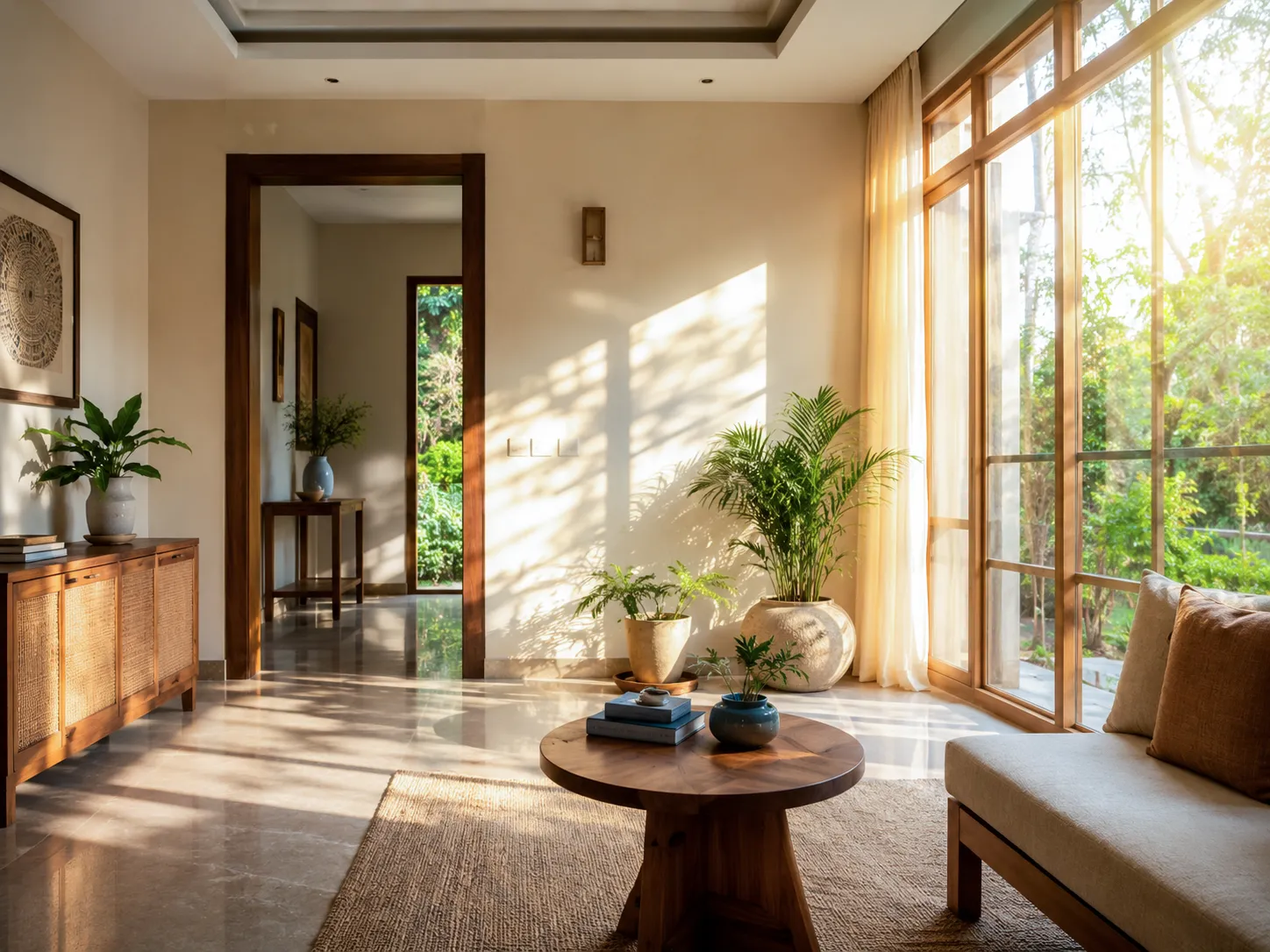
When the eastern part of a home holds the family living area, a children's study, or simply the breakfast table where the day starts together, the space is being used in harmony with its nature - helped along by the one fact nobody disputes, which is that morning light is the healthiest light we receive, setting the body clock for sleep, mood and alertness. Used this way over time, the space begins to feel welcoming and alive. People gravitate to it without being told to.
[IMAGE 2 - see image notes below]
Do spaces really hold memory?
Here is where Vastu offers its most intriguing idea.
What a space accumulates, in the Vastu view, is a relationship: the natural energy of the direction, the activities performed there, and the emotions those activities carry - reinforcing one another, day after day. When the quality of a direction and the purpose of a room agree, they strengthen each other, and the room slowly develops an atmosphere that supports whoever enters it. A meditation corner begins to invite stillness before you have even sat down. A well-loved study starts pulling you toward focus. A family room where laughter is routine greets even a stranger warmly.
You already know this feeling from the other side. Think of a grandparent's house - perhaps back home - that felt inhabited in a way no new flat ever does. Or think of a brand-new apartment: clean, bright, and strangely blank. An atmosphere still waiting to be written.
You can describe all of this in several languages, and Vastu is comfortable with every one of them. Call it subtle energy, as the tradition does. Call it habit and association - the room where arguments always erupt starts triggering tension at the doorway, because your nervous system has learned the pattern. Call it psychology, or simply atmosphere. Whichever lens you prefer, the observation underneath is identical: repeated human experience leaves a lasting impression on a space, and the space presses that impression gently back onto the people in it.
We shape our spaces through our choices. And over time, our spaces begin to shape us in return.
Your observation for the week
We continue the practice from the last two articles, now with a finer lens. Change nothing yet - no furniture, no compass. Simply notice, over the coming days:
- Where in your home do you feel calm?
- Where do you feel creative?
- Where do conversations happen naturally?
- Which room do you avoid - and what do you feel in the two seconds before entering it?
- How does your body respond in each space: breath, shoulders, the urge to stay or to leave?
Keep your answers somewhere. When we begin working with the directions individually, these notes become your starting map - more useful than any generic chart, because they describe your home and nobody else's.
Common questions about the energy of spaces
Why do different rooms in the same house feel different?
Every room combines a different orientation to the sun, different light and airflow, a different elemental character and a different history of use. Vastu describes the result as directional energy; you experience it as the plain fact that the bedroom, the kitchen and the study each greet you differently.
Can a house hold negative energy?
Spaces certainly accumulate atmosphere - through stagnation, clutter, poor light and the emotional patterns repeated inside them. Authentic Vastu takes this seriously without turning it into fear: there are no cursed houses, only spaces whose energy has gone heavy or stale. That condition responds well to cleaning, daylight, moving air, decluttering and a conscious change in how the room is used.
What happens if my kitchen is in the northeast?
Traditionally this is considered a mismatch, since cooking's fire element occupies the home's most subtle, water-linked zone. It is also extremely common in modern apartments and no cause for panic. The effect can be softened through how the zone is used, kept and balanced - a consultation can map the specifics for your layout.
Which direction is best for a meditation or prayer space at home?
The northeast. Its quiet, reflective quality has made it the traditional location of the prayer room for centuries. If your northeast is occupied by something else, choose the calmest, cleanest, most clutter-free corner you can dedicate - consistency of use matters nearly as much as direction.
How do I clear old, heavy energy from a room?
Start physically: deep-clean it, let in as much air and daylight as the room allows, and remove clutter honestly rather than relocating it. Then change how the room is used for a while - new activity writes new memory. Traditional practices such as mopping with salt water exist too, but the cleaning, the light and the changed use do most of the work.
Dr. Jaya Harikumar is the founder of JH Lifestyle, a holistic living consultancy based in Sharjah Media City, UAE, offering Vastu, Feng Shui, sound healing and wellness consultations across the Emirates. Book a free 30-minute consultation.


